

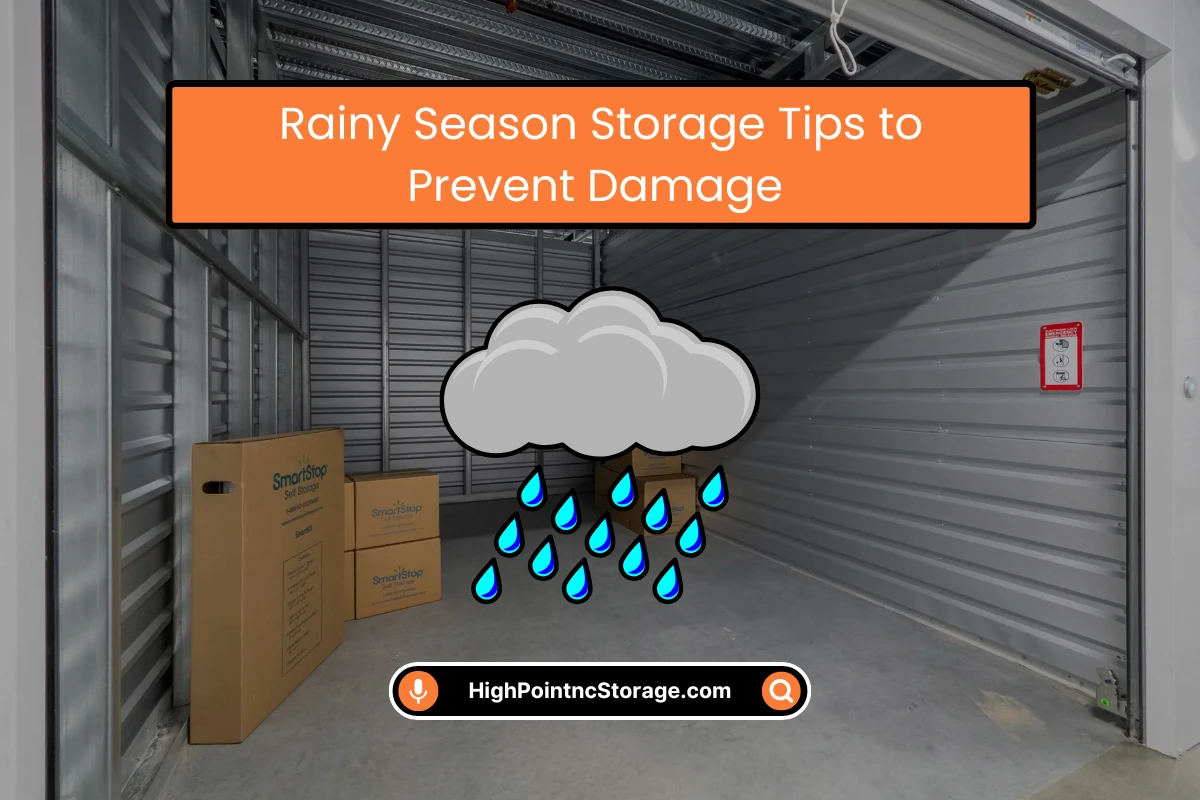
You know that feeling. The sky turns gray, the wind picks up, and suddenly you’re sitting on your couch, wondering if you remembered to put a tarp over that box of winter coats you stuffed in storage last month.
I’ve been there. We’ve all been there.
Here’s the thing about rain and storage units. Most people think the only danger is a giant leak where water pours in like a waterfall. That does happen sometimes, sure. But that’s not really what ruins most of your stuff. It’s the sneaky stuff. The humidity. The condensation. That dampness that creeps in slowly until one day you open your unit and think, “What is that smell?”
Not on my watch. And definitely not on yours.
Let’s Talk About Your Floor
I’m going to say something and I need you to really hear me.
Do not put cardboard boxes directly on the concrete floor.
I know it looks clean. I know it feels dry right now. But concrete is basically a sponge. Moisture travels up through it from the ground underneath, and you cannot see it happening. It’s happening anyway.
I opened a unit last spring for a guy named Dave. He had his late father’s wooden fishing boat motor sitting on the floor. Just sitting there. No pallet, no plywood, nothing. The bottom of that motor looked like it had been sitting in a puddle for months. It hadn’t. The floor just sweated underneath it.
So here’s what you do instead.
Get your stuff off the floor. I don’t care how.
- Wood pallets work great and sometimes you can get them for free behind grocery stores
- Those plastic shelving units from the hardware store are worth every penny
- Even an old piece of plywood on top of some cinder blocks is better than nothing
- Just get it up. Three inches is enough. Just get it off the concrete.
Cardboard Is the Enemy
I know. I know. You’ve been saving boxes for years. Your garage is full of them. They’re free. They’re easy to break down.
But cardboard is basically food for mold.
When cardboard gets even a little bit damp, it stays damp. It holds that moisture right next to your stuff. And it doesn’t dry out because it’s usually stacked under three other boxes.
I switched to plastic totes about five years ago and I will never go back. They’re not expensive. You can get them at the big box stores for like six or seven bucks when they go on sale. Watch for back to school sales. That’s when they’re cheap.
And here’s a trick. Those vacuum seal bags for clothes? Put your sweaters and blankets in those before you put them in the tote. Squeeze all the air out. Air carries moisture. No air, no moisture.
The Grocery Store Trick
You know how the deli at the grocery store has those clear plastic strips hanging in the doorway?
You can do the same thing with your furniture.
If you’re storing a couch or a mattress, don’t just wrap it in a cheap plastic tarp and call it done. Those tarps trap condensation. The temperature changes, the plastic gets cold, the air inside hits it, and boom. Wet furniture.
Wrap your soft stuff in a furniture blanket first. The quilted kind. Then put the plastic over it. The blanket absorbs the sweat so your couch doesn’t have to.
Airflow Is Weirdly Important
This sounds backwards, right? It’s raining. You want everything sealed up tight.
But still air is wet air.
You don’t need a fan running in there. You just need to not pack your unit like you’re playing Tetris and trying to win a world record.
Leave yourself a little path. Maybe a foot wide. Let the air move around a little bit.
And for the love of everything, buy some moisture absorbers.
Not the little shoe packets. Those are cute but they’re useless for a storage unit. Get the big bucket kind. They look like laundry detergent containers filled with white beads. DampRid is the brand everybody knows. Put one in the back corner. Put one near the door. Check them when you visit.
When the beads are gone and the bottom is full of water, that’s not gross. That’s victory. That’s water that didn’t get into your grandmother’s china cabinet.
Metal Stuff Is a Different Animal
Tools. Bikes. Gym equipment. File cabinets.
Metal sweats.
It’s just what it does. You can put a cast iron skillet in a perfectly dry unit and come back three months later to find orange spots on it. The skillet didn’t leak. The air just changed temperature and the metal reacted.
I wipe down my tools with an oily rag before I store them. Nothing fancy. Just a little motor oil on a shop towel. Creates a barrier.
And please don’t wrap metal in plastic and seal it up tight. That’s the worst thing you can do. Drape something breathable over it, or just leave it uncovered. Let it breathe.
What We Do On Our End
Here’s the part where I tell you about us.
We run High Point Storage, and we take rain seriously. Not just because it’s bad for business, but because we’ve seen what water does to people’s stuff. We’ve had to call people and tell them something got damaged. It’s the worst feeling in the world.
So we check the roofs after every storm. We watch the drainage around the buildings. We keep the climate control systems running right. Does it cost us money? Yeah. But it costs you more to replace your kid’s crib.
We try to earn your stuff every day. That’s the truth.
Quick Things to Check Before You Lock Up
Before you pull that door down and walk away, run through this list. Takes two minutes.
- Look at the ceiling: Any brown spots? Any peeling paint? Water stains? Tell the manager. Don’t assume they know.
- Smell the air: Stick your head in the unit and just breathe. Does it smell like your basement? Or your attic? It should smell like nothing. If it smells musty, something is damp.
- Touch the door: Not the handle. The metal door itself. If it’s cold and wet, your humidity is too high. Get more absorbers in there.
- Check your corners: Lift up the edge of that tarp or that blanket. Look underneath. Mold starts in corners where nobody looks.
The Truth About Rainy Season
Rainy season doesn’t have to ruin your storage. It’s actually a great time to store stuff if you do it right. The dust settles. The air cleans up. It’s just water.
Water isn’t the enemy. Stagnation is the enemy.
You can beat it with a few plastic bins, some wooden pallets, and a bucket of magic beads. It doesn’t take much. Just a little thought before you close the door.
I’ve been doing this a long time. I’ve seen units that look like a swamp and units that look like a showroom. The difference isn’t how much money somebody spent. It’s whether they took ten minutes to think about where the water might go.
One Last Thing
We don’t want you to worry about your stuff. That’s the whole point of renting from us. You should be able to sleep at night when it’s pouring rain without wondering if your Christmas ornaments are floating down the aisle.
So if you ever open your unit and something feels off. If the air feels heavy. If the floor looks darker than usual. Call us. Come find us. We’ll walk in there with you and figure it out together.
That’s what we’re here for.
Stop by High Point Storage and we’ll show you around. We’ve got units that stay dry even when the weather doesn’t cooperate. Come take a look.








0 Comments