

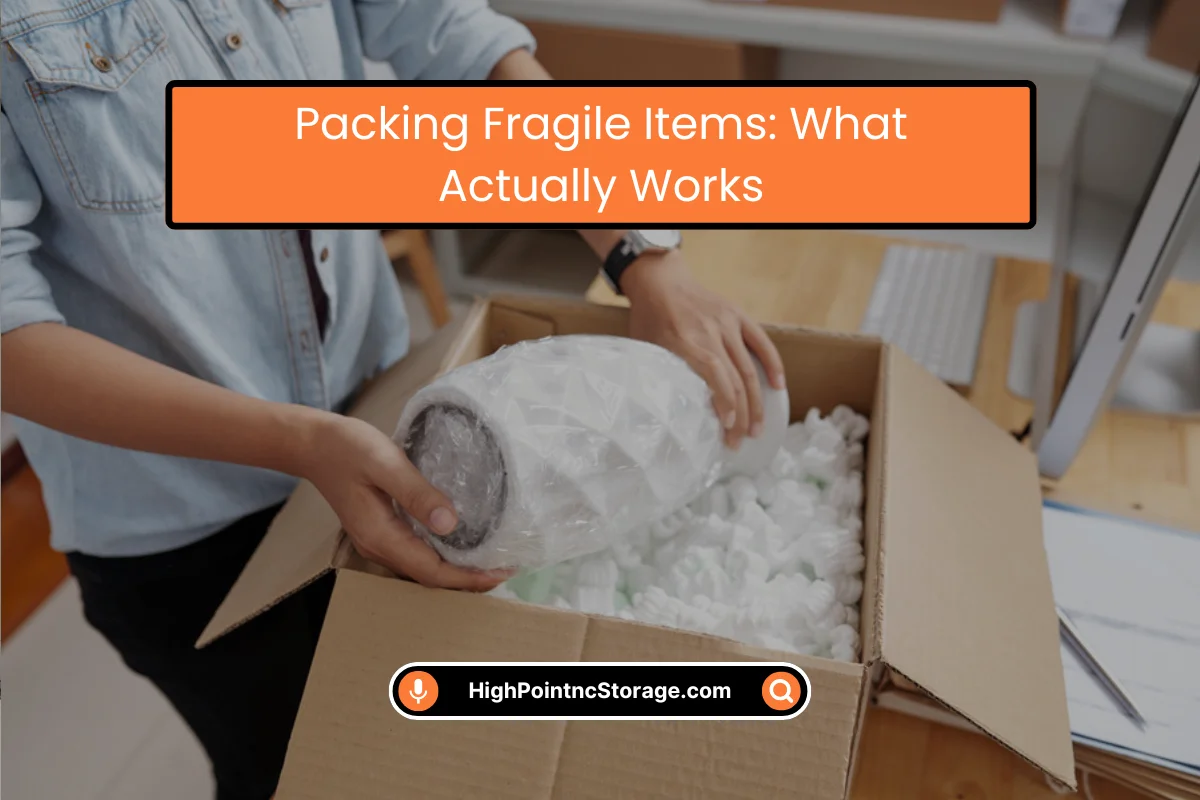
I used to think bubble wrap was magic. You know? Like if you just wrapped something in it, the universe was obligated to keep it safe. I’d pop a few bubbles for good luck and throw the box in the car and call it a day.
Then I opened a box one time and found a ceramic lamp that looked like it had been in a car accident. The bubble wrap was still perfectly intact. It just didn’t do anything.
That was the moment I realized I had no idea what I was doing.
So if you’re reading this because you’ve got stuff you actually care about—stuff that would hurt to lose—let me save you from that same sinking feeling.
Bubble Wrap Lies To You
Here’s the thing nobody tells you. Bubble wrap protects against one thing: a direct hit. Like if you drop the box, the bubbles absorb that shock. Cool. Good.
But what about when you stack boxes? What about when the box sits in the back of your car for three hours vibrating against the floor? What about when your movers (or your well-meaning friend) set something heavy on top?
Bubble wrap does nothing for pressure. Nothing for vibration. And if you wrap something too tight? You’re actually creating tension points. That delicate wine glass with the thin stem? You twist that bubble wrap around it like you’re mummifying it, and you’ve basically set a tiny trap.
I’ve seen it happen more times than I can count. People bring things into our storage units and they’re so proud of all the bubble wrap they used. And I hate being the one to say, “Hey, that might not hold up the way you think.”
So let’s actually break down what works. Not what the internet says. What actually works.
Start With What Touches The Item
Nobody thinks about this. We grab the bubble wrap, we put it directly against the item, and we wrap. But here’s the problem.
Bubble wrap is plastic. Plastic traps moisture. If you’ve got something with a painted surface, a mirror, an antique wood finish, or even certain types of glass? That trapped moisture sits there. And depending on where you’re storing things, temperature changes make that moisture expand and contract.
What happens? Cloudy spots. Peeling. Little micro-cracks you don’t notice until six months later when you pull it out and it looks ruined.
So before you even look at the bubble wrap, grab something else. White packing paper is fine for most things. For stuff you really love? Unbuffered acid-free tissue paper. It’s a few extra bucks but if you’re packing grandma’s china, spend the few extra bucks.
Wrap that first. Then worry about padding.
The Inside Matters More Than The Outside
This is where most people mess up and I promise you it makes such a difference.
Take a wine glass. If you just wrap the outside with bubble wrap, the stem is still vulnerable. The rim is still vulnerable. The bowl is hollow and empty.
Instead, crumple up a piece of paper. Stick it inside the bowl. Now the glass has internal support. Then wrap the outside. Then—and this is the part everyone skips—wrap the stem separately. The stem is the weakest part. It needs its own attention.
Same thing with vases. Same thing with any hollow item. Support it from the inside first.
For plates? Do not stack them directly on top of each other even if they’re wrapped. Put something between them. Foam plate protectors are cheap. If you don’t have those, use a paper plate or a piece of felt. Something to distribute pressure so when weight sits on top, it’s not transferring directly from one rim to the next.
Boxes Are Not All The Same
I cannot tell you how many times I’ve seen someone bring in a box that’s basically wet cardboard held together by hope. And they’ve got five hundred dollars worth of glassware inside.
If you push on the side of your box and it bends, that box is not ready.
Fragile items need double-walled cardboard. Period. Not the thin stuff from the grocery store. Not the box your Amazon order came in unless it’s the good thick kind. Go buy proper boxes if you need to. It’s worth it.
And then the real test? Shake it after you seal it. If you hear anything moving, your stuff is going to shift during transport. Open it back up and add more filler. Crumpled paper. Packing peanuts. Air pillows if you wedge them in so they can’t move. Whatever you have. But no empty space.
Empty space is where breaks happen.
Long-Term Storage Changes Everything
If you’re just moving across town, your packing job needs to survive a car ride. That’s one thing.
But if you’re putting things in storage for a few months or longer? Different game entirely.
Cardboard breathes. That sounds nice but it means humidity gets in. Temperature changes happen. Over time, that little bit of moisture you trapped inside with your bubble wrap starts doing damage. Mildew doesn’t need much to start growing.
This is why I tell people to consider plastic totes for anything they really care about if it’s going into long term storage. Locking lids, solid sides. They seal out the humidity. They keep dust off. Pests can’t chew through them.
But here’s the thing—you can’t just throw things loose in a tote. I see people do that all the time. They wrap something nice, toss it in a big plastic bin, and call it done. Then the tote gets jostled and everything slides around and collides.
Put foam padding on the bottom. Pack your wrapped items in tight. Put foam on top before you close the lid. Treat it like a protective case, not a garbage bin.
When You’re Bringing Stuff To Us
If you end up renting a storage unit from us for your fragile items, we want you to actually enjoy the peace of mind you’re paying for. That means we keep our spaces clean, dry, and secure. You’ve done the hard part at home—all that careful wrapping and packing. Our job is to make sure your stuff sits in an environment that won’t undo your work.
I hate seeing someone open a unit six months later and find that humidity or dust got to something they thought was safe. So we do what we can on our end. The rest is up to you and your packing technique.
Things I’ve Learned The Hard Way
Let me just list out some lessons I wish someone had told me years ago.
- Heavy items and light items cannot share a box. That crystal punch bowl will crush your wine glasses. Give them separate boxes.
- If you’re using packing peanuts, fill the box completely. Half full of peanuts is useless. They need to be packed tight so nothing moves.
- Tape the bottom of your boxes twice. Overlap the tape. I don’t care how strong you think the box is. The bottom is where failures happen.
- Label boxes that have fragile stuff. Not just “kitchen.” Write “fragile glass” on multiple sides. It takes two seconds and it reminds everyone handling the box to be careful.
- Don’t trust “fragile” stickers alone. People ignore them. A good box with no empty space protects your stuff even if someone handles it rough.
One Last Thing
Look, packing fragile stuff is stressful because you’re thinking about what happens if it breaks. I get it. I’ve been there with things that mattered to me.
But the reality is, if you take your time, if you don’t cut corners, and if you actually follow the layering idea—barrier first, then cushion, then a real box with no empty space—your stuff is going to be fine.
Bubble wrap is part of that. It’s just not the whole thing.
So next time you’re standing there with a roll of bubbles and a stack of dishes, slow down. Ask yourself if you’re doing enough. And if you’re not sure, add another layer. Add some paper inside. Upgrade the box. Whatever it takes.
Your stuff survived this long. It deserves the extra few minutes.








0 Comments