

Okay, picture this. My brother, Dave, calls me last September. He’s got that panicked, slightly manic energy in his voice. “The closing got moved up. I’ve got three days to get everything out of the house before the new owners come. I rented a storage unit. I need muscles and a strong will to live.”
I showed up, muscles questionable, will to live intact. He’d already made the first classic mistake: he’d rented a unit sight-unseen that was way too small. A 5×5 for a three-bedroom house’s worth of stuff. The second mistake was already in progress: he was just… throwing things in. It was a geographical catastrophe. A box labeled “Xmas” was stacked on top of “Summer Clothes” which was wedged next to “Dave’s Important Papers.” He was creating an archeological dig site of his own life.
We had to stop everything. We emptied the unit, took a breath, and went to the hardware store. What we learned that weekend wasn’t just about storing stuff; it was about accessing your life later without having a nervous breakdown.
Here’s the real-deal, no-bluff guide from someone who has felt the pain of a poorly packed unit.
First, You Gotta Get Ruthless
Look, storage units aren’t cheap. You’re paying monthly for square footage. Why pay good money to store garbage, literally or figuratively? Before you pack a single box, do the triage.
- The Keep Pile: Things with a clear future. Grandma’s china, your ski gear, business records you’re legally required to hold onto.
- The Sell/Donate Pile: That perfectly good breadmaker you used twice. The box of old DVDs. The extra nightstand. Be honest. If you haven’t touched it in a year, you won’t miss it. Have a garage sale, list it on Marketplace, or drive it to Goodwill. It’s liberating, I promise.
- The Toss Pile: Broken things, stained things, the mysterious cables to electronics you no longer own. Just let it go.
This step alone might save you from renting a larger, more expensive unit.
Your Packing Supplies Are Not a Place to Skimp
Those flimsy boxes from the grocery store? They’re a trap. They smell like bananas, they collapse under the weight of a hardcover book, and they attract critters. Spend the $50-$100 on proper supplies. It pays for itself.
We bought:
- A bunch of small, heavy-duty boxes all the same size. Uniformity is your secret weapon for stacking.
- A few plastic bins with snapping lids for the really important stuff—photo albums, important documents, wool sweaters. They’re waterproof and stack like Lego.
- A giant roll of stretch wrap. This stuff is magic. We wrapped Dave’s dresser with the drawers still in it so they wouldn’t slide out. We wrapped his sofa to keep it clean. We wrapped table legs to prevent dings.
- A pack of colored duct tape and a fat black marker. More on this in a second.
- A set of cheap, wire shelving units. This was our game-changer.
The Labeling System That Actually Works
Writing “Kitchen” on a box is useless. “Misc” is a crime. You need to be a detective about your future self. That person will be tired, in a hurry, and looking for one specific thing.
We used a color-and-number system. Green tape for the kitchen. Blue for the master bedroom. Red for the living room. On each box, we’d write the room and the specific contents on the SIDE of the box, not the top. When boxes are stacked, you can’t see the top. We also wrote a number: “Kitchen #1 – Pots, pans, baking sheets,” “Kitchen #2 – Everyday plates, bowls, mugs.”
Then, on a simple notepad (we kept it in the glove box of Dave’s car), we had a master list. “Kitchen #3 – Wine glasses, serving platters – FRONT LEFT.” This list became our bible.
The Load-In: You’re Building a Room, Not a Pile
This is the main event. Forget just filling space. You’re an architect.
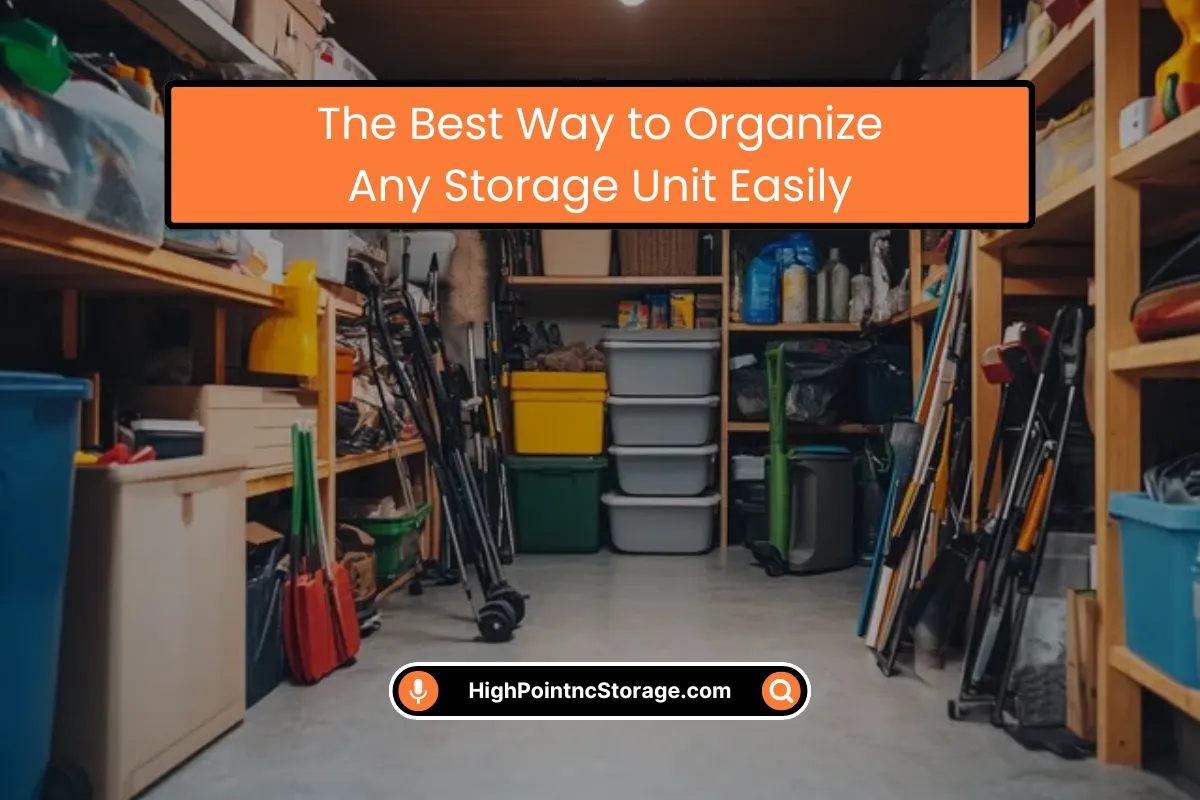
- Shelving goes in first. We assembled those wire shelves and put them along the left wall. Instantly, we had vertical space that wasn’t a teetering Jenga tower.
- Think in terms of “access frequency.” The stuff you’ll never need unless you’re moving out (think: old baby clothes, childhood memorabilia) goes in the back. The stuff you might need (seasonal decor, winter coats in July) goes in the middle. The stuff you’ll definitely need goes in the front or on the shelves. For Dave, that was a box of tools, his off-season clothes, and some important files.
- Furniture is your friend. Take the legs off tables and tip sofas on their ends. Use the hollow spaces! We filled Dave’s empty dresser drawers with lightweight items (linens, pillows) and then wrapped the whole thing. His washing machine drum held a bunch of cleaning supplies. Use every nook.
- Leave a walkway. This is the golden rule. You must be able to walk to the back of the unit without climbing. We left a central aisle. It feels like you’re “wasting” space, but it’s what makes the unit functional instead of futile.
- Build stable walls. Heaviest boxes on the bottom. Stack the uniform boxes in columns, like you’re laying bricks. Don’t pyramid. Keep the labels facing out.
The Final Reality Check
Cover everything with old sheets or cheap canvas drop cloths to keep the dust off. Don’t shove things right against the metal walls—a little air flow is good. And for goodness sake, put a small, inexpensive moisture absorber (like DampRid) in the center of the unit if you’re in a humid area. It’s cheap insurance.
Now, I’ll tell you where Dave moved all his stuff after that first disastrous 5×5. He called around and found your storage unit service. He said the guys at the desk actually gave him a friendly, knowing smile when he asked about unit sizes and talked him into a 10×15. They even had the dollies and hand trucks on site to borrow, which saved our backs. He’s been there ever since, and because we packed it right, he can actually get to his Christmas tree in December without swearing for an hour first.
That’s the goal. A storage unit shouldn’t be a black hole. It should be a tidy, accessible closet for your life’s chapters that are on pause. Put in the sweaty, thoughtful weekend of work upfront. You’ll thank yourself a hundred times over.










0 Comments